
MANUFACTURING CABLES
Contract mill-turn machining
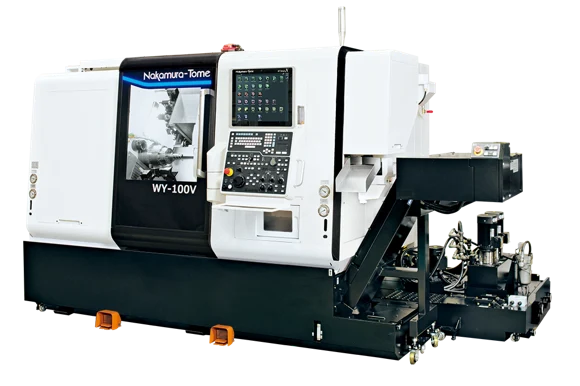
Operations planning for complex geometries with Nakamura WY100V infrastructure that handles turning and milling together.
Production plan by part.
Mill-turn selection is a more comprehensive decision than how many operations the part contains. The position relationship of the lathed surfaces with holes, machined pocket or flat surfaces should be dealt with in conjunction with the workholding order and measurement method. The goal is to align the production flow with the requirements of the piece.
Numerical capacity and delivery conditions are clarified at the bidding stage in accordance with the installed machine hardware and technical requirements of the part.
| Title | Evaluation |
|---|---|
| CNC machine infrastructure | 2 Nakamura WY100V. |
| Application examples | Side-hole shafts, key-mouth connections, lathed bodies with a milled surface. |
| Processing approach | Planning milling operations by turning in the same production flow. |
| Second-party operations | Main and counter spindle operations; transfer and workingholding requirements are determined by part. |
| Workholding | Datum surfaces, gripping length and protection of precision surfaces form part of the production plan. |
| Control | Position relationships and critical measures between operations are assessed through technical drawing. |
Frequently Asked Questions
Will Mill-turn complete each piece in a single workholding process?
This depends on geometry and workholding possibilities. Some parts may require additional workholding or a different process.
What should I send for a piece that requires milling?
Current technical drawing and the STEP model, if available, should be shared together. Position tolerances make it easier to evaluate and specify critical references in the image.
INTERESTING TECHNICAL WRITERS
Review the operation plan
Learn the impact of working and processing order on production.